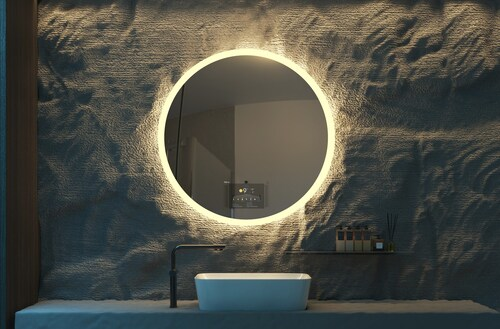

Thikra Blog shares accessory and power solution updates to help UAE users choose better chargers, power banks, cables, and mobile accessories.
AI-powered smart mirrors are redefining beauty, wellness, and the act of self-reflection by turning an everyday surface into an intelligent, data-driven companion.
CES 2026 showcases how these devices now analyze skin, track mood, and interpret subtle biometric patterns, blurring the line between self-care and self-surveillance.
As mirrors begin to think, anticipate, and advise, they raise a deeper question: how much of ourselves are we willing to share with the technology that greets us each morning?
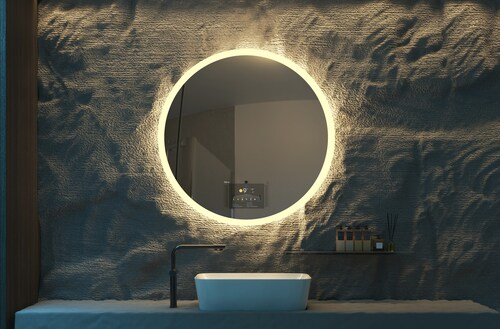
It starts like any morning. Steam softens the bathroom glass while light sneaks in through half-closed blinds. You lean closer, and somewhere between toothpaste and mascara, your reflection begins to move before you do.
A faint pulse appears on the glass – soft, amber, almost human. The mirror exhales.
“Good morning,” it says. “Hydration’s low again.”
Only this time, it isn’t a voice in your head.
Your mirror knows the rhythm of your heartbeat. It knows you didn’t sleep well. It knows your skin is drier than yesterday and that you’ve skipped breakfast three days in a row. Yet, it doesn’t judge. It observes, learns and remembers.
Once, only Disney’s Evil Queen had a mirror that talked back. Today, yours does too; minus the crown, plus an algorithm.

Now, it’s just another debut at CES 2026, wrapped in chrome and confidence, promising to make your mornings “smarter.” Mirrors that promise to perfect skin tone, monitor health, and even read emotion. They’re not vanity accessories anymore; they’re portals into our private ecosystems.
But this isn’t just a story about gadgets.
It’s about how technology is turning self-care into self-study – how our most private ritual, looking in the mirror, is becoming an exchange.
Because reflection, it turns out, no longer waits for you to look first.
When Reflection Learns to Think
A traditional mirror shows you what’s there.
A smart mirror tells you what it means.
Behind that glossy surface is an ecosystem of cameras, sensors, and learning models that turn your reflection into a live data feed. These mirrors don’t just see skin; they see patterns – hydration shifts, micro-expressions, fatigue cues, posture alignment, and subtle color changes invisible to the naked eye.
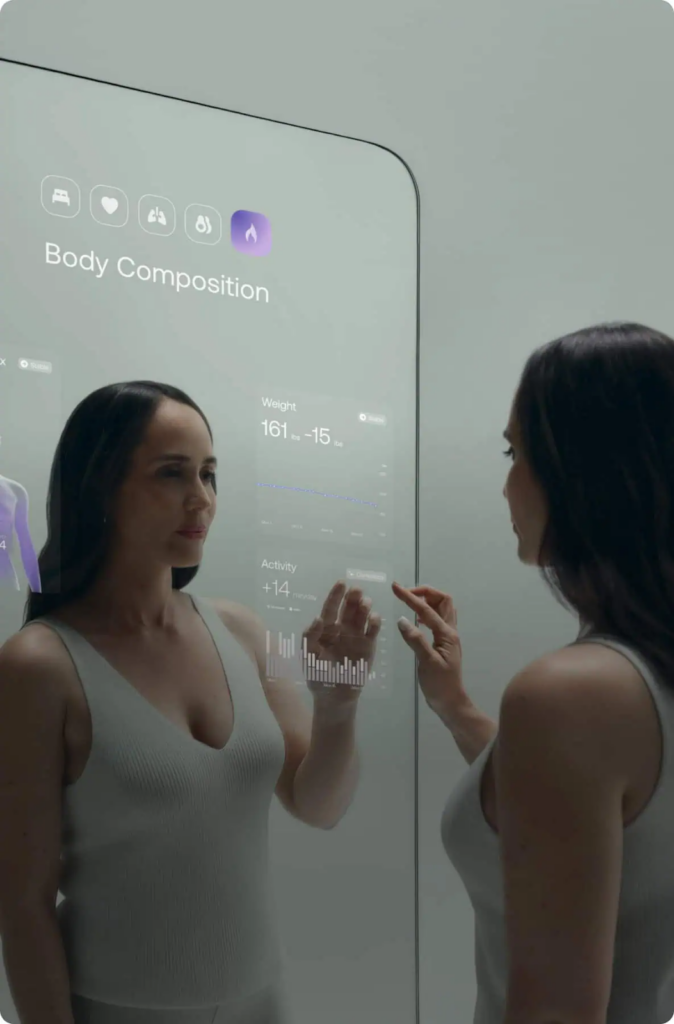
The process is almost orchestral. A hidden camera captures your face, infrared sensors map depth and tone, and an onboard AI engine interprets what it finds. Within seconds, your mirror can tell if your skin barrier needs moisture, if your sleep cycle’s off, or if that stress line wasn’t there yesterday.
Gesture once, and it switches from beauty mode to wellness mode. Speak, and it listens, syncing with Apple Health, Google Fit, or your skincare app to merge beauty data with lifestyle metrics. The lighting adjusts to mimic daylight so your makeup looks the same outside as it does here.
Brands like HiMirror, Baracoda’s CareOS Vera, and Capstone Connected have turned this once-luxury gimmick into a category. Each approaches reflection differently: HiMirror treats it like diagnostics, CareOS like emotion mapping, Capstone like design-led home integration.

It’s tempting to call it innovation, but it’s also intimacy, redefined. The mirror isn’t just watching anymore; it’s interpreting, and that’s a different kind of gaze altogether.
Why CES 2026 Is All About Smart Reflection
At this year’s CES 2026, the floor feels different. Among the drones, foldables, and next-gen wearables, one unexpected category is drawing the crowds: mirrors. Not just reflective glass, but intelligent surfaces that respond, advise, and adapt, turning the quiet act of getting ready into a personalized wellness ritual.
Baracoda’s BMind Smart Mirror, first introduced at CES 2024 as a mental-wellness companion, returns evolved. It now pairs emotion detection with biometric tracking, translating your facial micro-movements into mood insights and gentle behavioral prompts. Guided breathing, light therapy, and voice-based stress coaching all unfold from the same piece of glass.
As Baracoda CEO Thomas Serval said when unveiling the mirror:
“Technology that can monitor for subtle changes in health has the potential of improving the quality of millions of lives. Our mental state exerts a strong effect on our sense of physical well-being.”
Nearby, L’Oréal pushes beauty tech into biotechnology. Its Cell BioPrint prototype reads skin proteins and biomarkers within minutes, offering tailored skincare recommendations that blur the line between cosmetic and clinical.
At CES 2023, CEO Nicolas Hieronimus defined the company’s philosophy clearly:
“For L’Oréal, the future of beauty is inclusive. And this future will be made more accessible by technology.”
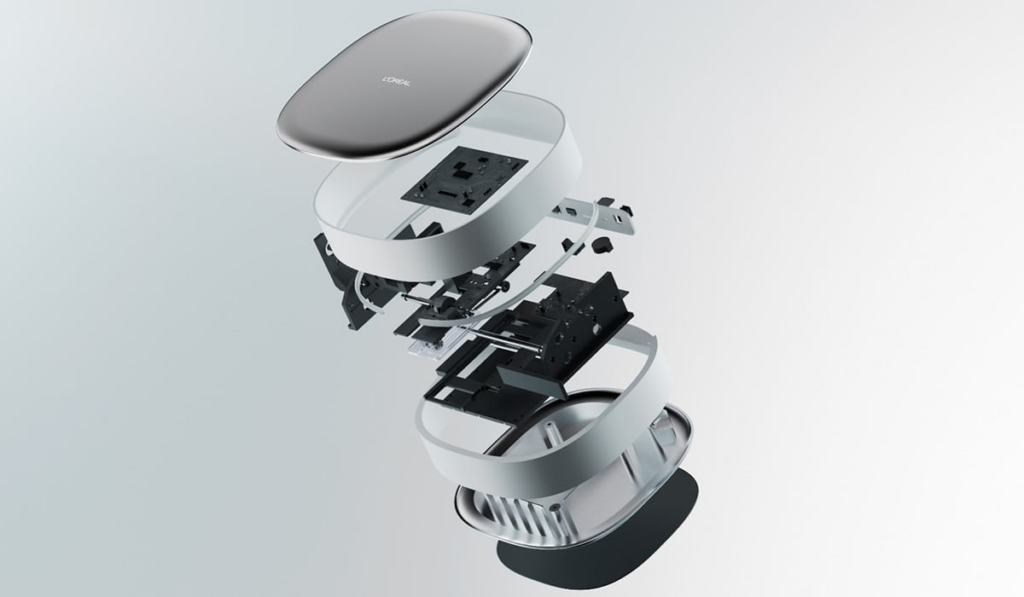
Meanwhile, the brand’s Mood Mirror AR system detects emotional reactions to makeup shades, fine-tuning colors in real time.
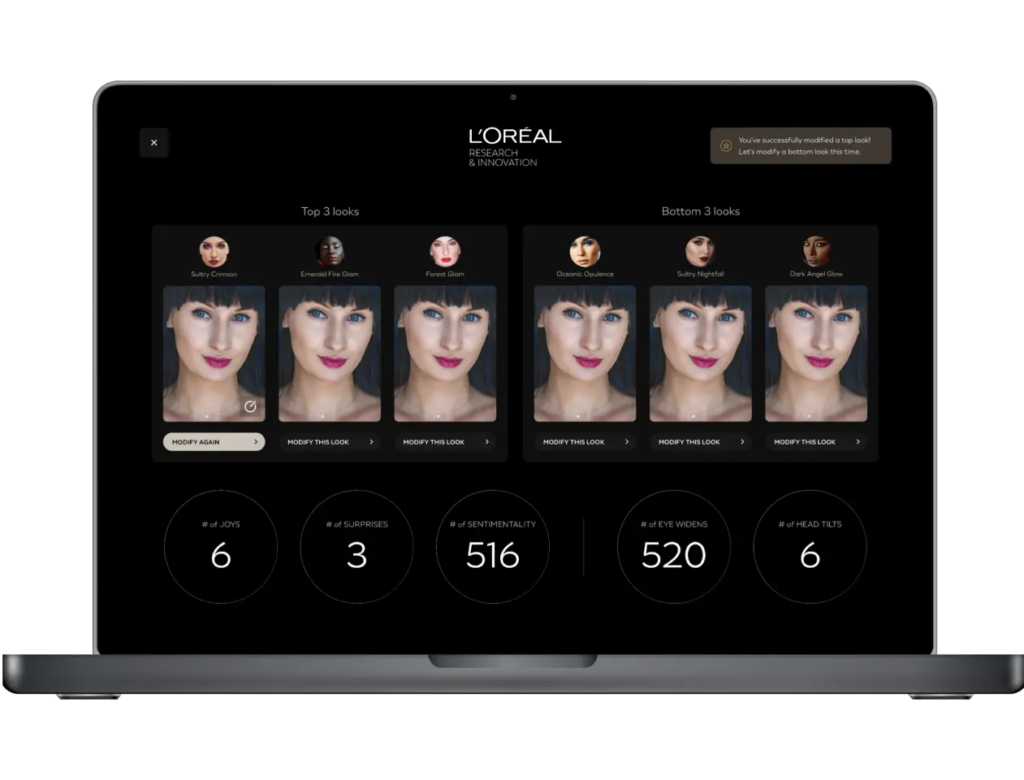
Together, these unveilings reveal a clear shift: the mirror is no longer a vanity product; it’s a wellbeing interface.
Smart surfaces now sync with health apps, regulate lighting for circadian balance, and use AI to create data-driven feedback loops around self-care.
CES 2026 showcases this momentum: mirrors that detect mood, analyze skin, and connect to health apps; brands uniting AI with daily rituals to blur the lines between self-care and self-knowledge.
The reflection is no longer passive. It’s intelligent, intuitive, and deeply human in its intent.
Do You Actually Need One?
The Good, The Glam, and The Creepy
The Good
For some, the answer feels obvious. A mirror that tracks hydration, spots fatigue, and remembers what your skin looked like last week? That’s not indulgence, that’s insight.
It’s the ultimate self-care companion: one that gamifies progress, rewards consistency, and turns daily maintenance into a small ritual of improvement. When your reflection becomes data, you start seeing patterns and progress that were invisible before.
If you already rely on your smartwatch to track sleep, why not let your mirror join the conversation?
The Glam
Then there’s the allure, the theater of it all. Standing before a glowing pane that wakes as you do, adjusting light and tone like a stage director, makes every morning feel curated.
It’s beautiful, functional, and almost cinematic. A mirror like this doesn’t just fit into your home; it transforms it, adding that quiet sense of living in the future, the kind that feels good to show off, even if you won’t admit it.
The Creepy
But here’s the pause: every feature that makes it smart also makes it watch.
The same sensors that study your skin also study your behavior. Each expression becomes data, each glance a digital record. Privacy policies promise protection, but the truth is simple, once your face becomes information, you can’t fully take it back.
Add the price tag and the effort of daily engagement, and the shine dims a little. For enthusiasts and wellness trackers, it’s a dream. For everyone else, it’s still a mirror that occasionally stares too hard.
So, do you actually need one? Maybe not, but it’s hard to ignore. Smart mirrors sit right at the intersection of self-care and self-surveillance: half-coach, half-critic. They promise awareness, accountability, and elegance, but demand trust and attention in return.
Whether you see that as a fair exchange or a step too far probably says more about you than it does about the mirror itself.
The Future of Mirrors: More Than Skin Deep
The mirror is on the edge of its next transformation. What started as reactive – scanning, tracking, responding, is evolving into something predictive. Soon, mirrors will recognize the earliest signs of stress or dehydration, detect mood fluctuations, even flag subtle physiological changes that hint at burnout or illness. It won’t just show what’s visible; it will sense what’s coming.
AR and VR layers are already being tested, blending fashion, wellness, and telemedicine into one seamless reflection. Imagine virtual fittings that mimic real-world light, or a remote consultation that feels face-to-face through your own mirror. At the same time, sustainability is reshaping the category – low-energy illumination, recycled materials, and minimalist designs turning these devices into quiet examples of responsible innovation.
If CES 2026 proves anything, it’s that reflection is no longer passive. It’s intelligent, interactive, and deeply human in what it chooses to reveal.
Final Take
The mirror has stopped being a prop in our routines. It’s become the stage.
What started as a glance before leaving the house has turned into a dialogue – one that measures, advises, and occasionally challenges us. From skincare and sleep tracking to emotion-aware insights, reflection has learned to think, and it’s not shy about sharing an opinion.
Still, behind the gloss lies the quiet question every innovation eventually faces: how much of ourselves are we willing to trade for precision, for progress, for being known? The answer will shape not just how we look in the mirror, but how we see ourselves in the world it reflects back.
source
l product names, brands, and images mentioned belong to their respective owners.
For more accessory reviews, charging guides, and power solution tips for UAE users, visit blog.thikra.co.
To shop authentic chargers, power banks, cables, and mobile accessories, explore Thikra Store at thikra.co.





Leave a Comment