
Disclaimer: This article may include information sourced from publicly available feeds and trusted external publishers. All credits for original content, media, and references belong to their respective owners.
Thikra Blog curates and organizes technology news for educational and informational purposes in the UAE. We always encourage readers to visit the original source for complete details.
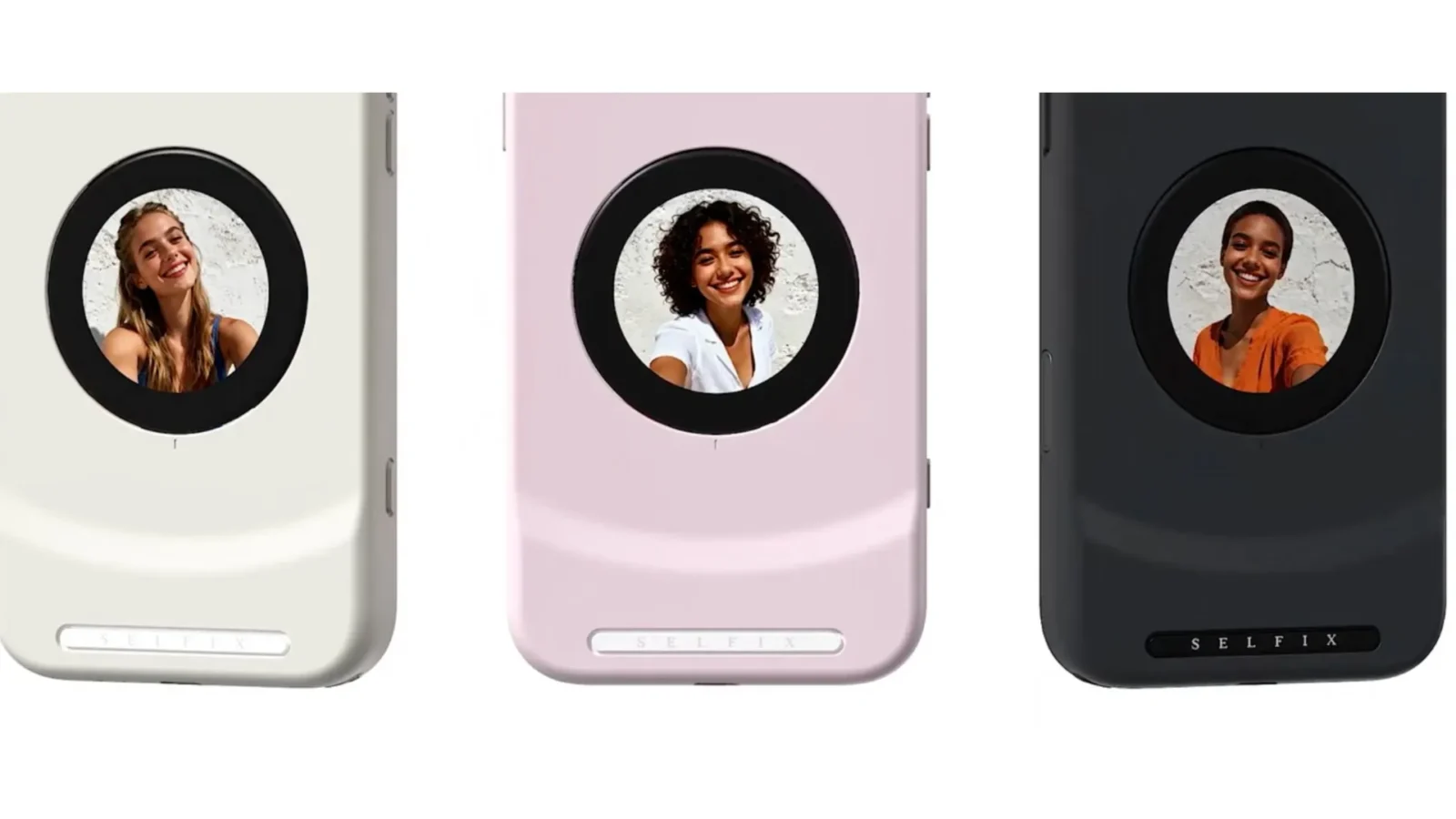
The idea of adding a second screen to a smartphone is not new, but it is rarely implemented in a way that feels practical for everyday use. A new phone case from Dockcase revisits the concept with a relatively straightforward approach: it adds a small rear display to the iPhone 17 Pro, primarily intended to act as a live preview screen for selfies taken with the phone’s main cameras. While the product is currently limited to Apple’s latest Pro model, the broader concept is arguably more relevant to Android phones, which have a longer and more experimental history with secondary displays.
The accessory, known as the Selfix case, integrates a 1.6-inch AMOLED touchscreen on the back of the phone with a 480 x 480 resolution. Its main function is simple. Instead of relying on the front-facing camera, users can frame selfies using the higher-quality rear cameras while glancing at the case’s display. This avoids the need for mirrors, guesswork, or third-party camera tricks. Power is drawn directly from the phone, which keeps the design relatively clean but also introduces the obvious trade-off of additional battery drain during use.
What makes this case more than a novelty is that it does not attempt to reinvent the phone itself. It works as a passive extension, requiring no separate battery or complex setup. From a usability perspective, this lowers friction, although long-term impact on battery health remains an open question. Still, as a proof of concept, it shows how accessories can add hardware features that phone makers often abandon for cost or design reasons.
Android manufacturers have explored similar ideas before. LG’s V10 and V20 included narrow secondary displays for notifications and shortcuts. Meizu experimented with a full rear AMOLED panel on the Pro 7, and Nubia built entire dual-screen phones. More recently, Xiaomi revived the concept with a rear display on the Xiaomi 17 Pro, mainly for camera previews and glanceable information. These efforts demonstrate that secondary screens can be useful, even if they rarely become mainstream. What is missing is a modular, accessory-based approach that allows users to opt in without committing to a niche phone design.
Beyond the display, the Selfix case also includes expandable storage via a microSD slot supporting cards up to 2TB. This is notable at a time when most flagship phones, especially iPhones, offer no storage expansion at all. For users working with large video files or high-resolution photos, external storage built directly into a case could be more convenient than cloud subscriptions or external drives.
At launch, the case is expected to be available in muted color options like Oat White, Blush Pink, and Midnight Black. Pricing and availability have not yet been confirmed, and there is no indication that an Android version is in development. Still, the accessory highlights a gap in the Android ecosystem: practical hardware add-ons that extend phone capabilities without requiring a complete redesign. If Android accessory makers are paying attention, this is a concept worth adapting rather than ignoring.
Sign in to your account
Note: All product names, images, brands, and logos mentioned above are the property of their respective owners. Thikra Blog provides summarized and curated tech information for UAE readers.
For more verified mobile phone guides, reviews, and UAE price updates, explore our articles at blog.thikra.co. To shop authentic devices and accessories, visit Thikra Store.

Leave a Comment