
Thikra Blog shares smart living tips, home gadget updates, and lifestyle technology insights tailored for UAE readers.
There’s a specific kind of guilt that comes from being a privacy-conscious Android user. You buy the hardware, you aggressively debloat the device (or even root it), and find polished open-source alternatives for every Google app on your phone.
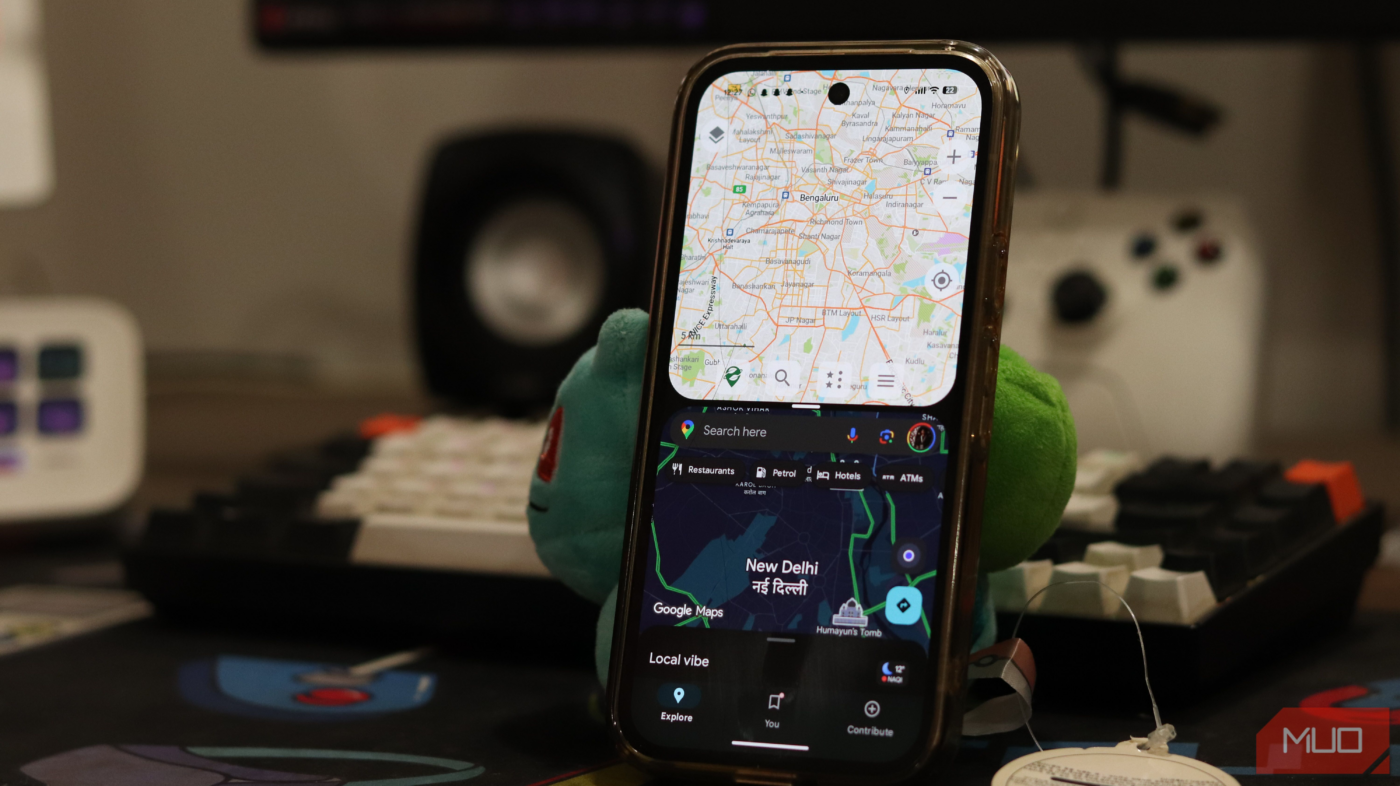
For the last month, I’ve been living that life with my commute. I swore off the data-hungry behemoth that is Google Maps and committed fully to Organic Maps. On paper, it’s everything I advocate for. But after four weeks of missed turns, closed restaurants, and a few particularly infuriating traffic jams, I’m heading back to Google Maps.
Why open-source maps feel great at first
The appeal of freedom, transparency, and ditching Big Tech

Organic Maps is a clean, privacy-focused fork of the old Maps.me. It tracks nothing, sells nothing, has no ads and is exactly the kind of open-source alternative I’d drop Google Maps for. It’s the digital equivalent of a quiet cabin in the woods. The first few days with the app will feel like a detox, especially if you’re used to the sensory overload of Google Maps with its pins for fast-food joints, constant prompts to review places, and clutter of UI elements.
Organic Maps is a breath of fresh air in this regard. The interface is smart, utilitarian, and beautiful. You download the map data for your region once, and it lives locally on your device. This makes the app significantly faster and more responsive. Pan and zoom operations are instant because it isn’t frantically fetching tiles from a server, and battery life is also spared compared to Google’s constant GPS and data polling.
Then there’s the feeling of ownership. These are your maps. You’re no longer a data point moving across a server grid, you’re a person looking at a digital piece of paper. For hiking and walking, it is arguably superior to Google’s, showing footpath details and elevation likes that often get ignored in Google Maps.

- OS
-
Android, iOS
- Price model
-
Free, Open-source
Organic Maps is a privacy-focused offline maps & GPS app for hiking, cycling, biking, and driving.
Real-time traffic is where things fall apart
Navigation without live data is a gamble, not a feature
But this romance was short-lived. For me, it died when I got stranded for hours in a traffic jam in another city I was visiting.
Google Maps’ greatest strength isn’t its cartography; it’s the userbase. Every person driving with Google Maps open is a sensor, feeding real-time data back to its servers. When a car 2 miles ahead of you slams the breaks, Google knows a traffic pileup is happening before it even starts and reroutes you accordingly.
Organic Maps, a victim of its own virtuous nature, does none of this. Because it respects your privacy and doesn’t collect data, it has no idea that the highway you’re on has turned into a parking lot.
I had an approximately 150 mile bike ride ahead of me, with no signs of traffic. And then I sat in a grid lock for well over an hour, having to take a work call on the side of the road starting at the blue line on Organic Maps. There was no warning, no alternative route suggestions, no indicators of traffic. I was flying blind because I had chosen to fly invisible.
This wasn’t a one-time occurrence either. Over my four weeks with Organic Maps, I was constantly running into traffic, closed businesses, and closed roads. The lesson was clear: live traffic isn’t a feature you can code; it’s a feature you harvest. You cannot have accurate real-time traffic data without getting close to the kind of mass surveillance Google Maps does.
Finding places shouldn’t be this hard
Incomplete POIs turn simple searches into scavenger hunts
The second major problem appeared when I tried looking up specific places. It could be a specific restaurant, a fast-food place, an event venue, or anything else. Chances are, you’re not going to get the most updated information here.
Organic Maps pulls its data from OpenStreetMap (OSM). I love OSM, it’s essentially the Wikipedia of maps, maintained by a passionate community of volunteers. But like Wikipedia, it relies on humans to update it manually.
On multiple occasions, I drove to restaurants, guided by Organic Maps, only to find the place shut. A lot of times these places had shut down months ago. Google Maps already knew this. In fact, Google Maps likely knew the hours were changing before the owner even updated their website, simply because the location data of visitors would be dropping.
When looking for backup options, there’s also the business hours void. Google tells me if a place is busy or closing soon. Organic Maps, on the other hand, lists times that are outdated or missing entirely.
This isn’t Organic Maps’ fault, of course. It’s a limitation of the dataset and the app’s privacy-friendly practices. But when you’re hungry and driving in an unfamiliar part of town, you don’t care about the nobility of open-source data contributions. You just want to know if the kitchen is still open.
Search isn’t nearly as useful as it should be
When accuracy and relevance matter most, it misses
We’ve all been spoiled by Google’s fuzzy search algorithms. You can type “best coffee near me” or a misspelled version of a street name into Google Maps, and it automatically understands what you’re trying to search for.

Organic Maps is more literal. It’s stricter with its searches. If you don’t get the spelling of a street or restaurant right, good luck finding your destination. In a country like India, where names can often be a long string of alphabets, looking up your destination can quickly become a chore. I found myself having to look up addresses in a web browser and copy-pasting them into Organic Maps—something that more or less defeats the purpose of a standalone navigation app.
The privacy tax is real
What you gain in control, you lose in convenience
I’m not deleting Organic Maps. The app still has a place, especially if you’re hiking or traveling in areas with no reception. It’s a fantastic piece of software that does exactly what it promises: it navigates you from A to B without spying on you.

I tried the Waze alternative no one talks about — and it’s great, up to a point
Can this lesser-known alternative dethrone the reigning champions of navigation?
But for the daily grind? For the commute where five minutes or a traffic pileup can make the difference between being on time or late? For finding a pharmacy that’s open in the middle of the night? Google Maps is the better option.
Google’s navigation app isn’t just a navigation app anymore. It’s a dynamic, real-time layer of the physical world around us powered by the collective data of billions of users. Organic Maps is a paper map you can interact with digitally on your phone.
Yes, I do want to protect my privacy. But sitting in traffic for hours to protect it isn’t always the price I’m willing to pay.
source
Note: All product names, brands, and references in this post belong to their respective owners.
For more smart home guides, lifestyle tech updates, and UAE-focused recommendations, visit blog.thikra.co.
To shop smart gadgets, accessories, and lifestyle electronics, explore Thikra Store at thikra.co.







Leave a Comment