
Thikra Blog shares smart living tips, home gadget updates, and lifestyle technology insights tailored for UAE readers.
By now, you’ve probably written your fair share of prompts for AI chatbots like Gemini or ChatGPT. With powerful large language models (LLMs) powering these chatbots behind the scenes, it doesn’t take much instruction for Gemini or ChatGPT to produce a decent output. However, the quality of the prompt you provide an AI model directly correlates to the quality of the output you receive. If you want better responses from your AI chatbots, you need to give them better prompts—it’s a science.
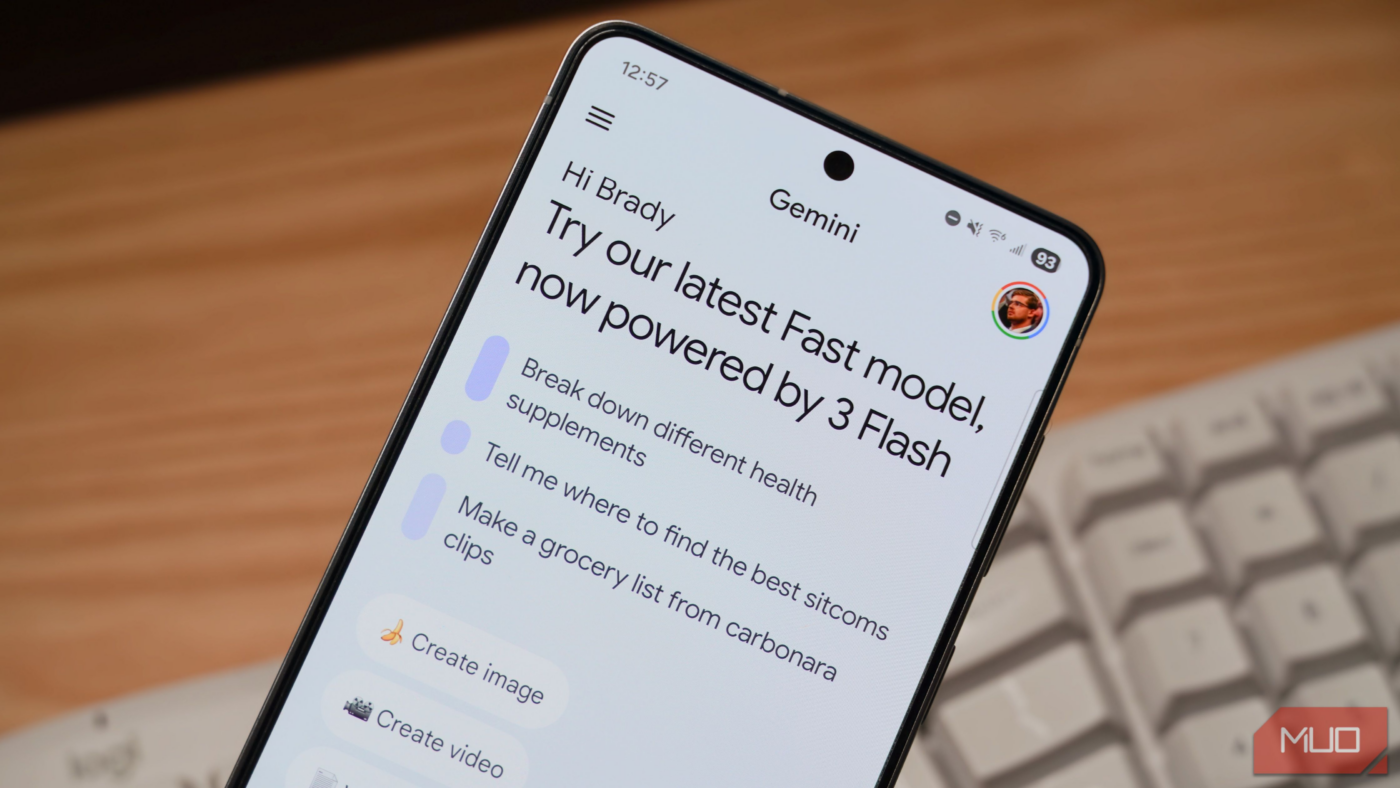
To level up your prompts, you’ll want to start prompt engineering, which involves optimizing and crafting LLM inputs specific to your task. I’m a hardcore Gemini user, and I recently learned about a prompt engineering technique called meta-prompting. Essentially, this method uses AI to generate prompts that will eventually be fed into a chatbot. It’s an easy way to improve your prompting skills while barely lifting a finger, and if you aren’t using it, you’re starting behind the curve.
Broad instructions used to generate specific prompts

If you’re new to the world of prompt engineering (like I was just a few weeks ago), this Prompt Engineering Guide is a valuable resource as you learn the various strategies for writing successful AI input prompts. Let’s start by explaining what meta-prompting actually is—it’s a prompting technique that helps AI chatbots like Gemini understand how to approach a problem. Meta prompts add structure and syntax to guide the LLM powering a chatbot in the right direction.
You can write meta prompts yourself, but a quicker, easier way to start meta-prompting is to ask Gemini to generate the detailed inputs on its own. I got this idea from Google DeepMind UX Engineer Anna Bortsova, who uses Gemini to create meta prompts that are fed into Google AI tools like Veo 3. Bortsova’s prompts created with Gemini can be pages in length, adding more detail and specificity than you’d get with instructions written by a human.
“There are no rules here—we’re experimenting—but I’ve found a few things that help steer Gemini to really rich prompts,” Bortsova writes. “You want to define a very specific task: ‘write a detailed prompt that an LLM will understand.’ And you want to be clear about your format and style: say, an 8-second stop-motion animation of paper-engineered scenes. Then give it constraints, such as foil or shiny paper, rather than just general paper. Then let it do its thing.”
If there’s anyone who knows how to use Gemini best, it’s a Google DeepMind engineer. So, I used Gemini to create my own meta prompts, and the results were stunning.

Try This AI Prompting Formula and I Guarantee You’ll Love the Results
If you want AI to work for you, this is the formula you need to know.
Gemini helps me generate photos and build custom apps
Meta-prompting with Gemini expands what is possible when using AI apps, because detailed and optimized prompts become the standard. When I used Google’s Antigravity app to build the custom Android and web app pictured above, I didn’t write the prompt given to Antigravity. Instead, I gave the following prompt to Gemini, asking it to write instructions for the agentic integrated development environment (IDE):
Create a detailed prompt for an AI-based IDE that will build a simple play-counter app for every title in this user’s discogs library: https://www.discogs.com/user/dippinthrutherecords
There should be a simple interface in the web app where I can tally how many times I’ve played each release and see a ranking of the ones I’ve played most
only include albums that I have in the discogs collection
Gemini returned a detailed prompt that, frankly, I don’t understand much. The meta-prompt created with Gemini is extremely specific, defining the structure and syntax Antigravity needs to use to fulfill my request. It includes deep coding knowledge to point the AI agent in the right direction. All of this came from the very simple prompt you see above, and I was thrilled with the results.
Here’s the meta prompt Gemini came up with for Antigravity:
With only a few follow-up prompts, Antigravity was able to create my custom Vinyl Spin Counter app based on Gemini’s instructions. The working, installable Android APK demonstrated all the benefits of meta prompting. The final output was better than it would’ve been had I given Antigravity a simple, human-written prompt. Additionally, the meta prompting strategy was more efficient, requiring fewer requests. This helps power users avoid hitting rate limits or wasting tokens too quickly.
While you can use an AI chatbot to help write meta prompts for complex tasks, it’ll work for simple ones, too. In the gallery below, you can see the difference between images created with prompts I wrote myself and ones made with meta prompts from Gemini:
In my view, there are very few situations where you wouldn’t want to have an AI chatbot write desired prompts on your behalf. There’s almost no downside—it’s often quicker than painstakingly writing a custom prompt while including additional details that will improve the quality of Gemini’s output.
Anytime specificity matters, use AI to write prompts

By now, you’re probably wondering when to use Gemini to generate meta prompts. Meta prompting can be useful for any LLM-related task, but it’s most helpful for tasks and topics you aren’t familiar with. For example, when I used Gemini to write a coding prompt for Google Antigravity, the meta prompt it generated included computer science knowledge I would’ve never known to include.
Whether you’re trying to generate an image or build an app, meta prompting with Gemini can help you achieve better results.
source
Note: All product names, brands, and references in this post belong to their respective owners.
For more smart home guides, lifestyle tech updates, and UAE-focused recommendations, visit blog.thikra.co.
To shop smart gadgets, accessories, and lifestyle electronics, explore Thikra Store at thikra.co.








Leave a Comment